
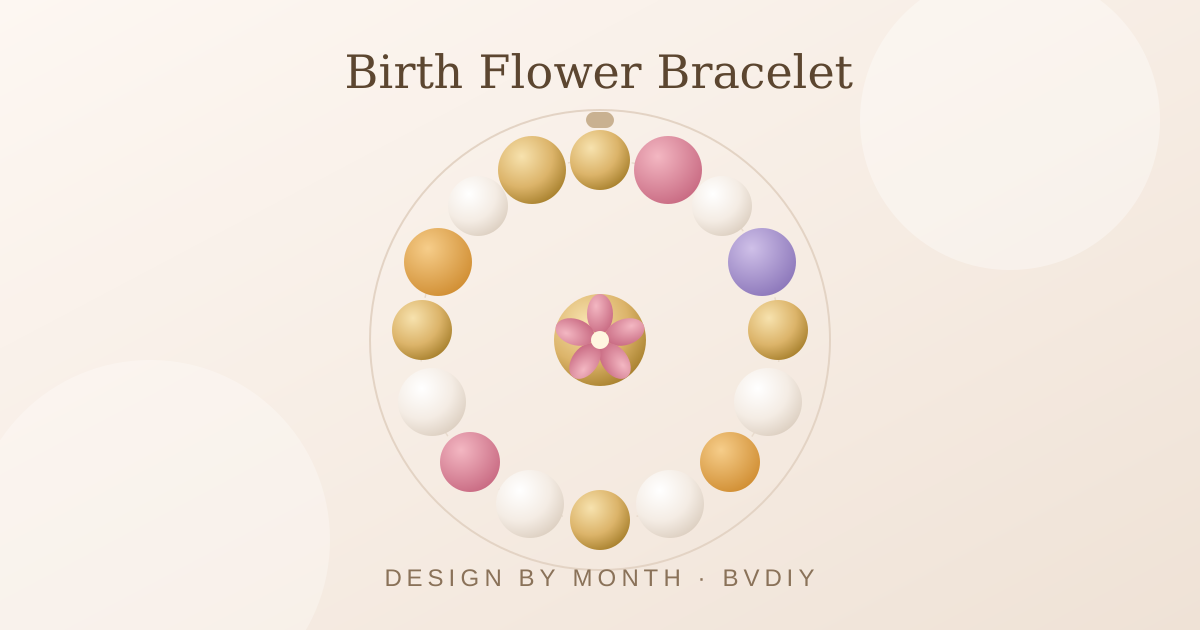
A birth flower bracelet takes one of the oldest gift ideas in jewelry and makes it more personal without making it louder. Every month has a flower, every flower has a color, and that color can anchor an entire beaded design. This guide walks through the twelve months, then shows how to translate the idea into a bracelet someone will genuinely wear: the right accent count, a neutral base that lets the flower speak, and a layout that still looks good on an ordinary morning.
Pick the flower color that matches the recipient's birth month, then use it as the accent rather than the whole bracelet. Put three to five accent beads in an 8mm design (or five to seven in 6mm) on a neutral base of cream, ivory, or pearl, and separate each flower group with a plain spacer bead. Match the metal to the jewelry the person already wears. You can design the whole thing bead by bead in the BVDIY bracelet designer, and browse the exact tones in the bead library before you commit.
1. Why birth flowers work on a beaded bracelet
A birthstone bracelet is bound by the gem. Emeralds are green, sapphires are blue, and that is that. A birth flower is bound by a color range instead, which is why it works so well with beads: you can choose the exact shade — a soft dusty rose for June rather than a bright crimson — and match it to a person's wardrobe instead of asking them to match their wardrobe to a stone.
It is also a gentler signal. A flower color does not announce itself the way a charm or an engraved word does. Someone who knows the meaning sees it immediately; everyone else just sees a well-designed bracelet.
2. The twelve birth flowers and their colors
Birth flower lists vary slightly by country, so treat these as the most commonly recognized pairings. Where a month has two, either one is a fair choice — pick the color that suits the person better.
- January — Carnation (also snowdrop): soft pink, blush, or deep red.
- February — Violet (also iris): purple, lavender, and blue-violet.
- March — Daffodil: warm yellow and soft gold.
- April — Daisy (also sweet pea): white with a soft pastel accent.
- May — Lily of the valley: white and pale green.
- June — Rose (also honeysuckle): pink, blush, or a deeper red.
- July — Larkspur (also water lily): blue, periwinkle, and violet.
- August — Gladiolus (also poppy): coral, red, and soft green.
- September — Aster (also morning glory): purple and lilac-pink.
- October — Marigold (also cosmos): orange, amber, and gold.
- November — Chrysanthemum: bronze, burgundy, and deep rust.
- December — Narcissus (also holly): papery white with deep green or red.
Notice how many of these colors are hard to find in gemstones — the yellows, oranges, greens, and soft greens especially. That is where the birth flower idea earns its place.
3. Build the bracelet around one neutral base
The most common mistake is treating the flower color as the finish line. A bracelet made entirely of orange beads is a commitment; the same orange used sparingly becomes a detail someone reaches for daily.
Choose a base first. Cream, ivory, pearl white, soft gray, or warm sand all work with nearly every flower color. A pearl or glass base reads a little dressier; matte stone reads more everyday.
Add the flower as accent. On an 8mm bracelet, three to five accent beads is plenty. On a finer 6mm design, five to seven smaller accents hold the same visual weight.
Separate with spacers. A single metal or stone spacer between groups gives the eye a place to rest. It is the small detail that makes a beaded bracelet look composed rather than assembled.
4. Match the metal, then the finish
Look at what the person already wears. Gold spacers warm up rose, amber, yellow, and burgundy tones. Silver, white gold, or stainless steel keeps blue, lavender, white, and gray palettes crisp. If you genuinely do not know, a warm gold spacer is the safer guess because it flatters most flower colors.
Then decide on the finish. Polished crystal and glass catch light and suit someone who saves jewelry for occasions. Matte stone, wood, and pearl suit someone who wears the same piece every day, including through the gym and the kitchen sink. If sensitive skin is a concern, stone, glass, pearl, and wood beads with a secure clasp are the kindest combination.
5. Combining several birth flowers
Multi-flower bracelets are where this idea gets genuinely useful. A mother might carry her own month plus each child's; a friendship bracelet might carry two; a wedding gift might combine the couple's months.
Two rules keep a multi-flower design from looking messy. First, keep every flower group the same number of beads — if the June group has three, give the October group three as well. Second, repeat one neutral bead between every group and use one metal throughout. That rhythm is what makes several colors read as a single considered design.
6. Practical notes before you design
Sizing. Measure the wrist snugly, then add about half an inch for a comfortable fit; add a little more if you prefer a relaxed drape. If you are guessing, 6.5 to 7 inches covers most adult wrists, and a short extension chain removes most of the risk.
Bead scale. 6mm is delicate and works well for layered stacks. 8mm is the everyday middle ground and the most popular choice. 10mm makes a statement and suits a design where the flower color is the main event.
Flower-shaped beads versus flower colors. Color is the subtler route and stays wearable for years. A flower-shaped accent bead is more literal, and it works best as a single focal bead near the clasp rather than repeated around the bracelet.