
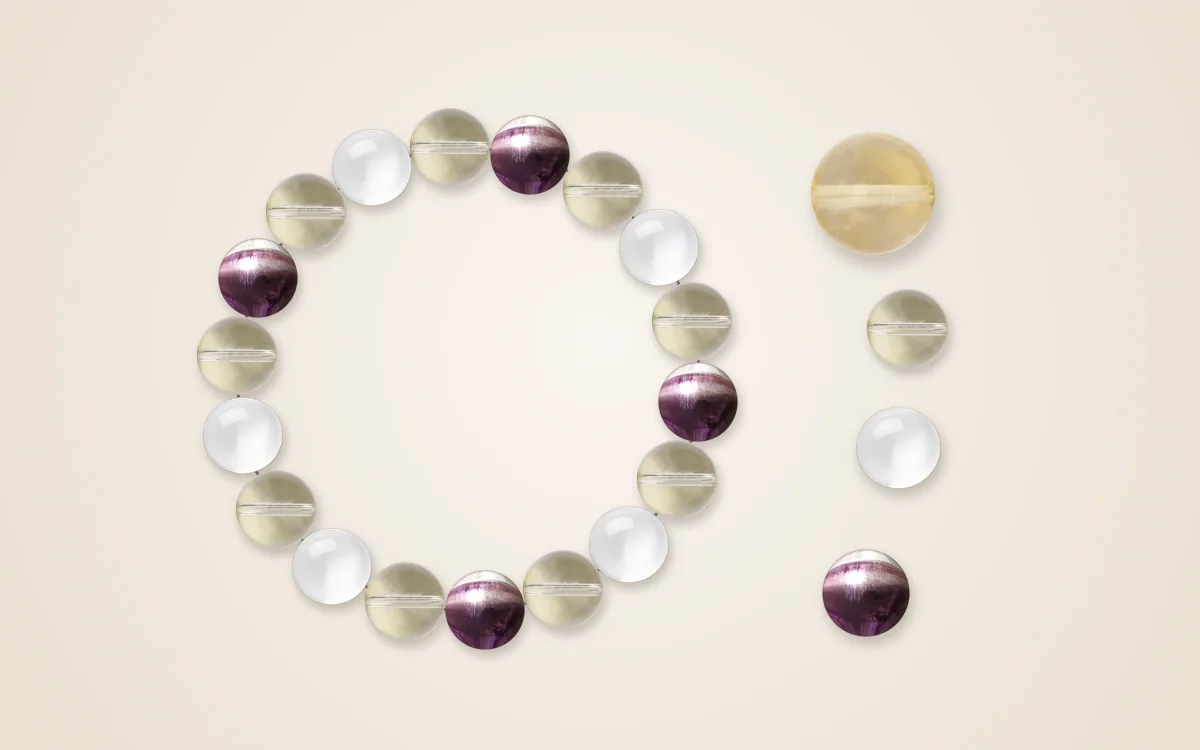
Citrine is the golden quartz most people picture when they want a sunny bracelet, and it is also one of the most relabeled stones in the trade. This page explains what citrine is, how heat-treated citrine differs from natural, and how to care for it. The BVDIY studio doesn't carry citrine, so the last section shows two warm-yellow bracelets made from stones it does have.
Citrine is yellow to orange quartz, hardness 7, and good for daily wear. Natural citrine is uncommon and usually pale yellow; most citrine sold today is amethyst that was heated until it turned yellow-orange. Both are real quartz, but they aren't worth the same, so ask the seller which one it is. For a similar warm color without citrine, Yellow Jasper or Rutilated Quartz are alternatives.
What is citrine?
Citrine is the yellow to orange-brown variety of quartz, colored by traces of iron. It rates 7 on the Mohs scale, the same as clear quartz and amethyst, so a citrine bracelet takes handwashing, desk edges and daily wear without much fuss. The name comes from the French word for lemon, which describes the paler natural stones better than the deep orange ones most shoppers see. Citrine is also one of the two modern birthstones for November, together with topaz.
Is most citrine really heated amethyst?
Yes. Most citrine on the market is amethyst, or sometimes smoky quartz, that was heated until the purple or brown changed to yellow or orange. Natural citrine, colored that way in the ground, is much less common. Heat treatment is permanent and accepted in the trade; the stone doesn't fade back to purple. The issue is honesty in labeling, since natural citrine is the more valuable of the two.
Heating amethyst is routine, which is also why the Amethyst bead card in the BVDIY studio says it is commonly heat-treated. The amethyst bracelet guide covers that side of it.
How do you tell natural citrine from heat-treated?
You can't prove it by eye, but color gives a strong hint. Only a gem lab can say for certain. What to look at:
- Color: natural citrine is usually pale lemon to soft honey, sometimes with a smoky cast. Heated amethyst tends toward strong orange, burnt orange or reddish brown.
- Evenness: heated material from geodes often shows a whitish base fading to dark orange tips in crystal points. In round beads that becomes patchy color from one bead to the next.
- Price and brightness: very cheap, bright, even yellow "citrine" beads can be dyed quartz or glass. Glass often shows tiny round bubbles under a loupe.
- The label: ask whether the stone is natural, heated or dyed, and get the answer in writing.
The FTC's jewelry guides (16 CFR Part 23) say sellers should disclose a treatment when it isn't permanent, needs special care, or significantly affects the stone's value. Because heated citrine is stable, practice varies, and some listings just say "citrine". When the label is silent, ask.
What does citrine mean in crystal folklore?
Citrine is traditionally associated with warmth, optimism and good spirits in modern crystal folklore, and it is sometimes called the merchant's stone. That nickname comes from popular crystal writing, not from anything a stone does; a bracelet won't bring money or business. Plenty of people buy citrine for the color of late sunlight alone, which is reason enough. The stone-by-stone meanings guide lists the folklore for every bead in the BVDIY library.
How do you look after a citrine bracelet?
Citrine needs the same care as any quartz: mild soap, lukewarm water, a soft cloth, and no sudden jumps between hot and cold. Store it apart from harder stones and metal so the polish doesn't get scratched. Natural citrine with a pale color is worth keeping out of a sunny window for long periods, since strong light can lighten some quartz colors over time. A stretch bracelet should be dried flat and rolled on and off rather than pulled wide.
Which warm-yellow stones can stand in for citrine?
None of these stones is citrine, but each gives a warm yellow or gold that sits where citrine would in a design. They are all in the bead library today:
| Bead | Look | Price | Folklore line |
|---|---|---|---|
| Yellow Jasper | Opaque mustard yellow | $1.40 | optimism and steady focus |
| Rutilated Quartz | Clear quartz with fine golden needles inside | $6.20 | clarity and personal growth |
| Sunstone | Orange with a glittery shimmer | $3.00 | warmth, vitality and good fortune |
| Tiger's Eye | Golden brown with a moving silky band | $1.80 | courage and steady focus |
Yellow Jasper is the nearest in color; Rutilated Quartz is the nearest in feel, because it is transparent with gold inside. Pyrite also reads gold, but it is metallic and best kept dry.
Honey strand: for a 17 cm wrist at 8 mm the studio gives 23 positions. Put 5 Rutilated Quartz together at the front and fill the other 18 with Yellow Jasper. The beads come to $56.20, and with the $12.99 stretch base the bracelet is $69.19. The golden needles catch the light at the front while the jasper carries the color around the back.
All-yellow budget strand: for a 15 cm wrist at 6 mm the studio gives 27 positions. Fill all of them with Yellow Jasper for $50.79. Six millimeter beads keep the opaque yellow from looking heavy on a small wrist.
For a purple-and-gold look like citrine beside amethyst, alternate Amethyst with Yellow Jasper. If you need a November gift that leans on the month itself, the birthstone bracelet ideas have more month-by-month options.
Sources: Citrine as quartz, heat-treated amethyst and November birthstone: GIA Gem Encyclopedia and GIA birthstones by month. Quartz hardness: Mindat mineral database. Treatment disclosure: FTC Guides for the Jewelry Industry, 16 CFR Part 23. Stone meanings are traditional folklore, not financial or health advice.