
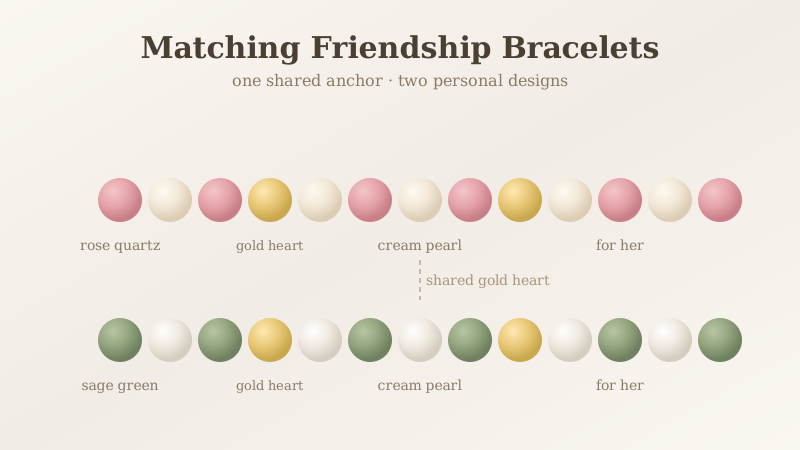
A friendship bracelet is one of the rare gifts that gets more meaningful the longer you wear it. It does not get used up or put away — it stays on the wrist as a small, daily reminder of someone who matters. And when the bracelet is custom-made, it becomes something no store could replicate: colors you chose together, beads that carry private meaning, and a design built bead by bead around your friendship. Whether you are making matching sets for a milestone birthday, a graduation, a long-distance send-off, or just because, this guide covers how to design friendship bracelets that look intentional and feel deeply personal.
Design matching friendship bracelets around one shared element, then let the rest stay personal. Choose a shared color, a shared bead, or a shared metal finish, and build each bracelet from there so the two clearly belong together without being identical. Complementary pairings — rose quartz with sage green, sky blue with warm sand — feel more thoughtful than exact duplicates. Add meaning with small details: a birthstone bead, an initial charm, or a bead in the color of a shared memory. Measure each wrist separately and add about 1 cm of ease, then build both designs bead by bead in the BVDIY bracelet designer and preview them side by side before you order.
1. Start with one shared element
The mistake most matching bracelets make is trying to match everything. Two identical bracelets can be sweet, but they also limit each person's style — and they leave no room for the details that make a friendship design special. A stronger approach is to anchor both bracelets to one shared element and let the rest diverge.
That anchor can be a color (the shade of a place you traveled together), a material (the same gemstone or the same metal finish), or a single accent bead that appears in both designs. Everything else — the main bead color, the arrangement, the size — can follow each person's own taste. The result reads as a matching set the moment you see them together, yet each bracelet still feels like it belongs to its owner.
2. Color pairings that feel like the two of you
Color is where a friendship bracelet earns its personality, and there are two strong directions to take.
Matching colors — the same palette in both bracelets, arranged differently. If you both love soft neutrals, one bracelet can be cream and pearl with gold spacers while the other uses the same family with a rose quartz focal bead. Same palette, different look.
Complementary colors — two shades that are different but clearly belong together. Rose quartz and sage green, sky blue and warm sand, lavender and soft grey, deep teal and terracotta. These pairings look designed rather than accidental, and they let each bracelet suit its owner's coloring and wardrobe.
A quick way to make color personal: use each person's favorite color as the base of their own bracelet, and the other person's favorite as the accent. That single swap says “this was made for us” more than any matching pattern can.
3. Beads that carry the meaning
Friendship bracelets get their weight from small, specific details. A few ideas that work well in the BVDIY bead library:
Birthstone beads. Each of you wears your own birthstone — or the other's. It is the classic friendship detail, and the birthstone bracelet guide covers all twelve months if you want to match a specific birthday.
Shared-memory colors. The color of the beach where you met, the city where you studied, the band you saw live. One accent bead in that shade keeps the story private but always present.
Initials and letters. Letter beads or initial charms are the most direct way to put each other's name on the wrist — your initial on her bracelet, hers on yours.
A single anchor bead. One bead that is the same in both designs — the same turquoise, the same obsidian, the same pearl — acts as the visual handshake between the two bracelets.
Keep the meaningful details to one or two per bracelet. A friendship bracelet carrying three stories in every inch stops reading as a design; restraint is what makes the details land.
4. Matching sets and “two halves” designs
There are two classic structures for friendship bracelets, and both work well.
Mirror designs. The same beads in the same order, sized to each wrist. This is the truest matching option and it works best with a single, strong palette.
Two halves of a whole. Each bracelet carries one part of a shared idea — you wear the moon, she wears the sun; you wear the dark beads, she wears the light. Separately each stands on its own; together they complete a thought. This structure is especially nice for long-distance friendships, because each person carries half of the story wherever they go.
5. Size each bracelet to its owner
A matching design fails if the fit is wrong — and wrists differ more than people expect. Measure each wrist separately with a flexible tape or a strip of paper, then add roughly 1 cm of ease so the bracelet sits comfortably above the wrist bone. Bead size changes the feel too: 8mm is the versatile standard, 6mm reads delicate and minimal, and 10mm makes a bolder statement. If the two of you have very different wrist sizes, the shared-anchor approach handles it gracefully — the anchor stays identical while the proportions follow each person.
6. When the moment is right to gift them
Friendship bracelets fit almost any occasion, but they land hardest at moments of change: graduations, moving to a new city, milestone birthdays, weddings (a set for the bride and her closest friends), or the start of a big shared adventure. The best time to give them is when the friendship itself is the point — and a custom design makes it clear the gift is about the two of you, not the calendar. Because each bracelet is built bead by bead, you can quietly include a detail that only the two of you will ever recognize.
Browse the bead library to pick your shared anchor, then build both designs bead by bead and preview them side by side at the BVDIY bracelet designer. A set that says “this is us” is a few clicks away.