
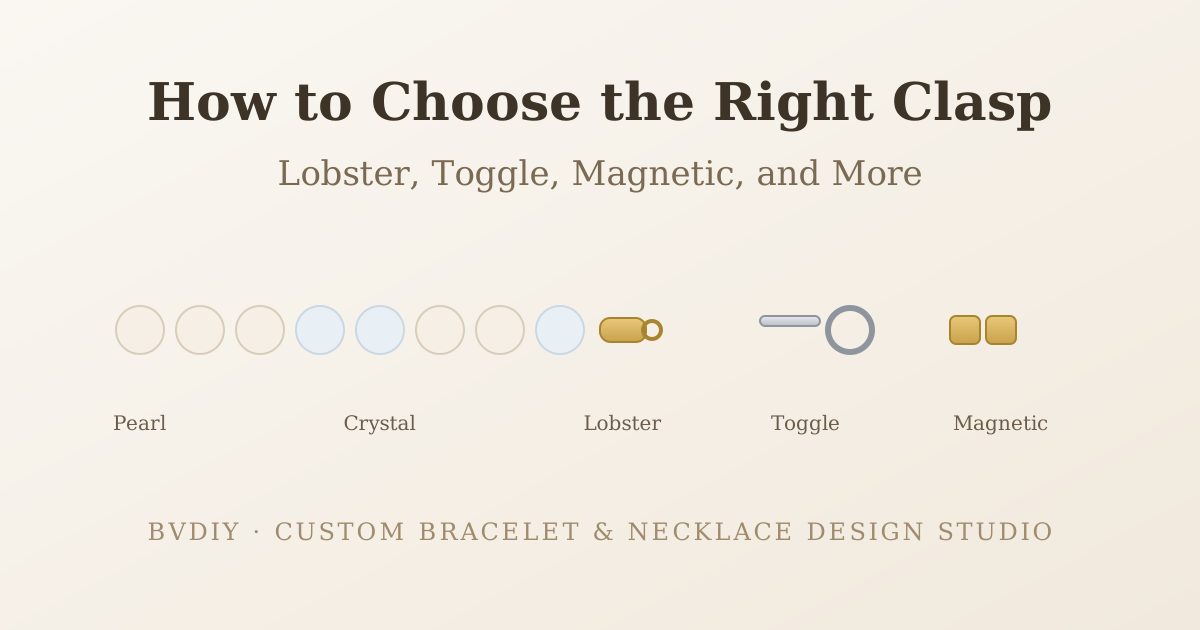
The clasp is the smallest part of a custom bracelet, but it is the part you touch every time you put it on. It decides how secure the bracelet feels, how easily it opens and closes, and how the design sits on your wrist. Beautiful beads with the wrong clasp can feel awkward, while a simple design with the right clasp feels effortless. This guide compares the most common clasp types for beaded bracelets — lobster, toggle, magnetic, and slide — so you can choose the closure that fits your design, your wrist, and the way you wear jewelry.
For most custom beaded bracelets, a lobster clasp with an extension chain is the safest all-round choice: it is secure, easy to fasten with one hand, and the chain lets the wearer fine-tune the fit by a quarter to half an inch. Choose a toggle clasp when you want a decorative focal point and do not mind using two hands to close it. Choose a magnetic clasp for lightweight bracelets you take on and off often — just avoid heavy beads and keep it away from pacemakers. Choose a slide or box clasp for a flush, dressier finish. Whichever you pick, match the clasp metal to your spacer beads for a cohesive look. You can see your clasp options as you build your design in the BVDIY bracelet designer.
1. Why the clasp matters more than you think
Most people choose beads first and think about the clasp last, but the clasp does three jobs at once: it keeps the bracelet on your wrist, your fingers find it every time you dress, and it is a visible piece of metal at the most turned part of your wrist. The right clasp also has to suit the bracelet's weight — a light bracelet with a heavy toggle flops around, and a heavy bracelet with a weak magnetic clasp can fall off without warning.
2. Lobster clasp: the everyday standard
The lobster clasp is the most common closure on beaded bracelets, and for good reason. This small spring-loaded hook snaps into a ring and stays locked until you press the release. It is secure enough for daily wear, small enough to disappear into the design, and easy to fasten with one hand. Lobster clasps suit almost every bead type — pearl, crystal, gemstone, and glass — and pair naturally with an extension chain. If you are unsure which clasp to choose, this is the default that works for nearly everyone.
3. Toggle clasp: a decorative statement
A toggle clasp has two parts: a bar and a ring. You slide the bar through the ring and let it settle sideways so it cannot slip back out. Because toggles are larger than lobster clasps, they double as a small piece of jewelry in their own right — a gold toggle can act as a subtle focal point at the wrist. Toggles need a reasonably snug fit, because a loose bracelet lets the bar rotate and work free. They also take two hands to fasten, so reserve them for designs where a bolder, more bohemian look is the goal.
4. Magnetic clasp: quick and convenient
A magnetic clasp is two halves that snap together the moment they get close. It is the fastest closure to use, which makes it ideal for lightweight bracelets you put on and take off several times a day. Heavy gemstone beads need a stronger magnet, and a stronger magnet means a bulkier clasp that can overpower a delicate design. Two cautions: magnetic clasps should not be worn by people with pacemakers or other implanted medical devices, and they should stay away from cards with magnetic strips.
5. Slide and box clasps: a flush, dressy finish
Slide and box clasps are the dressier cousins of the lobster. A slide clasp glides together and locks flush, leaving a nearly invisible closure; a box clasp catches a tongue inside it with a satisfying snap. Both sit flat against the wrist and give a sleek, finished look that suits evening pieces. The trade-off is precision — they must align exactly to close, so they are less forgiving when you are fastening in a hurry.
6. The extension chain: built-in adjustability
An extension chain is a short segment of chain, usually about half an inch, attached to the clasp. The wearer chooses which link to hook into, so one bracelet fits comfortably across a small range of wrist sizes. This makes it the most useful feature for gift-giving — the recipient dials in the perfect fit themselves. Extension chains also absorb the small change in wrist size between summer heat and winter cold. Our guide to measuring your wrist for a bracelet explains how to convert a wrist measurement into a finished length with the clasp included.
7. Match the clasp metal to your design
The clasp is a finishing detail, and it should agree with the rest of the bracelet. If your spacer beads are gold, choose a gold clasp; if they are silver, choose silver. A mismatched clasp is the most common small mistake in custom design — it is hard to spot in a photo but catches the eye every time the wrist turns. If you like mixing metals, keep the same rule you use for spacers: one dominant metal, the other as an accent. See our guide to gold vs silver spacer beads for a fuller comparison.
8. Which clasp should you choose?
Here is a quick decision guide based on how the bracelet will be worn:
- Daily wear and maximum security: lobster clasp with an extension chain.
- A decorative statement or bohemian style: toggle clasp, with a snug fit.
- Putting it on and taking it off often: magnetic clasp on a lightweight pearl or crystal design.
- A sleek, dressy finish: slide or box clasp.
- A gift for someone else: lobster clasp with an extension chain, so the fit is adjustable.
Every clasp option is available in the design flow, so you can weigh your choice against the beads you have already picked. Browse the BVDIY bead library first to lock in your bead style, then finish the design with a clasp that matches.