
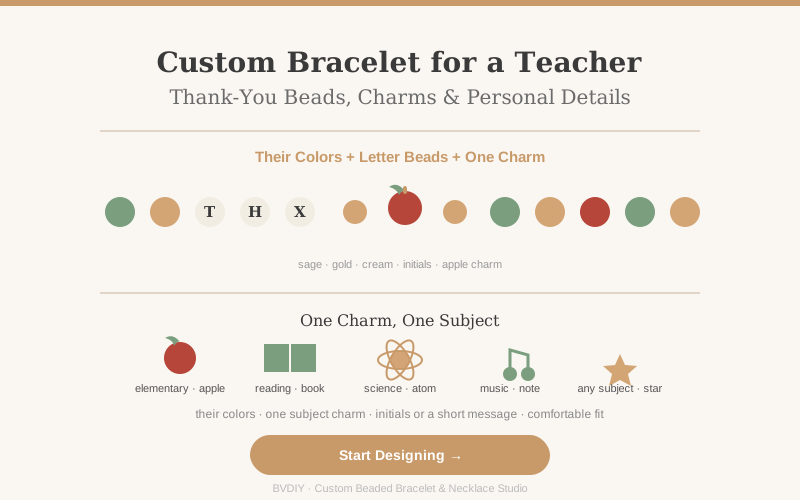
Teachers receive a lot of thank-you mugs and gift cards, but the gifts they keep are the ones that say something specific. A custom bracelet — built from colors they actually wear, one charm that fits what they teach, and letter beads carrying initials or a short message — is the kind of thank-you that ends up on a wrist rather than in a cabinet. This guide walks through how to design one that feels personal without feeling fussy.
Build the bracelet around three elements: colors the teacher actually wears, one charm that fits what they teach — an apple for elementary, a book or pen for English, an atom for science, a music note for music — and letter beads with their initials or a short message like "Thank You" or a class motto. Choose smooth, durable beads and a secure clasp, because a teacher's bracelet has to survive a full day of hands-on work. You can build and preview the whole design in the bracelet designer, starting from the bead library.
1. Why a bracelet is the teacher gift that lasts
Think about what happens to most teacher gifts. Mugs get crowded out of the cupboard, candles get burned, gift cards get spent, and the pile of small presents from years of students blurs into one. What teachers remember is the gift that showed someone paid attention to who they are, not just what they do for a living.
A bracelet works because it is worn, not displayed. Every time the teacher catches it on their wrist — before first period, during a stack of grading, at a staff meeting — it quietly says someone noticed them. And because it is a custom design, it cannot be mistaken for a generic token. It is the difference between "here is a thank-you" and "here is a thank-you that is specifically about you."
Timing is flexible. The first weeks of a new school year are a wonderful moment — it arrives as encouragement rather than part of the December rush, and teachers are building new routines they will wear it through. End of year, Teacher Appreciation Week, and retirement are all natural moments too. Whenever it arrives, the meaning is the same.
2. Start with the colors they actually wear
The fastest way to make a teacher bracelet feel personal is to skip the idea of "teacher colors" entirely and look at the person. Do they dress in warm earth tones, in black and quiet neutrals, or in soft pastels? A bracelet built from their real palette gets worn; one built from a theme gets admired and set aside.
If you are not sure, the safest route is a neutral base — white, grey, clear crystal, or matte black — with one accent color: their favorite color, or the school's color if they are proud of it. That keeps the bracelet wearable with everything they already own while still carrying the personal touch. The bead library carries most shades in pearl, glass, crystal, and matte finishes, so you can match a color they wear often without guessing across dozens of listings.
3. Choose a charm that fits what they teach
The charm is where the bracelet becomes about the classroom. An apple reads instantly for an elementary teacher. A small book or an open-pages charm fits an English or reading teacher. An atom or a flask suits a science teacher, a globe or compass suits geography and history, a music note suits a music teacher, and a tiny palette or brush suits an art teacher. A number or abacus charm works for math.
Not sure, or the teacher covers several subjects? Universal symbols carry the same warmth: a star for the teacher who made students feel seen, a sun for the one who brightened the room, a heart for the one who cared, an infinity for the influence that does not end. Keep it to one charm, two at the absolute most, and give it a clear position — centered as the focal point, or tucked near the clasp so it peeks out as the wrist turns.
4. Add letter beads with initials or a short message
Letter beads turn a thoughtful bracelet into an unmistakably personal one. The quiet version: the teacher's initials — two or three beads, framed by a spacer on each side so they read as a deliberate element rather than a random cluster. The expressive version: a short word spelled out, like "Thank You," the teacher's first name, or a class motto word such as "Read," "Grow," or "Kind."
Another idea that teachers genuinely love: the class year, or the room number, as a small set of number beads. It turns the bracelet into a memory of a specific group of students — a detail only they will fully understand. Whichever you choose, keep the beads around the letters simple so the message stays the focal point, and give letter beads a spacer on each side so the text reads clearly.
5. Build for a full day on their feet
Teaching is hands-on work: writing on boards, washing hands, reaching for books, opening doors, bending over desks. A teacher's bracelet has to survive that. Choose smooth, durable beads — glass, gemstone, or natural wood — with stainless steel or gold-plated spacers, and a secure clasp such as a lobster or magnetic style that will not come undone mid-lesson.
For teachers who work with young children, in a lab, or in a workshop, keep the profile low: a flat charm that sits against the wrist rather than one that dangles and could catch on things. And size matters — most women wear bracelets between 6.5 and 7.5 inches, with 7 inches suiting the majority; most men wear between 7.5 and 8.5 inches, with 8 inches most common. A relaxed fit is more comfortable through a long day and easier to take on and off.
6. Give the story with the bracelet
The design carries the meaning, but a short card makes sure it is heard. Write down what each element says: the colors match their style, the charm is what they teach, the beads are their initials or the message. A gift with an explained meaning is a gift that gets remembered — and on a hard day in the middle of the school year, the story is right there on their wrist.
If you are giving it on behalf of a class, have the students each add a word or sign the card. The bracelet stays simple; the card carries the voices. That combination — a quiet, well-made design plus a room full of names — is the thank-you teachers talk about for years.
Related guides: How to Design a Custom Bracelet for a Graduate and How to Design a Bracelet with a Quote or Short Message.