
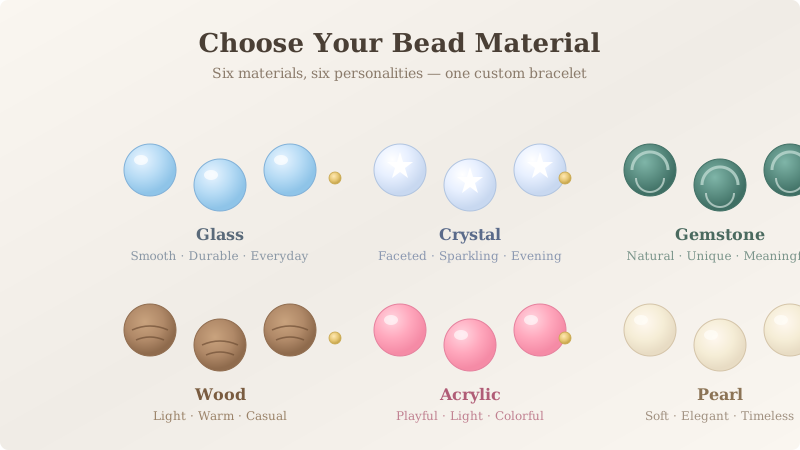
A crystal bracelet is only as good as what the beads are actually made of. Every bead in the BVDIY studio is a natural material, and each one is labelled with its name and any treatment, so you can choose by look, feel and care instead of guessing.
The studio's beads are natural crystal and gemstone, cultured freshwater pearl, shell and wood, plus a few metal-tone spacers used as accents. Quartz, agate and jasper are hard and suit daily wear; howlite, malachite, fluorite and pearls are softer and need gentler care. Treatments such as heating are stated on each bead card. Try them in the bead library.
What does natural mean for a bead?
Natural means the bead was cut from a material that formed in the earth or grew in nature: a mineral, a shell, a pearl grown in a freshwater mussel, or wood. It does not mean untreated. Heating, for example, is a normal step for some stones, and we say so on the bead card. What natural does exclude is glass, resin and plastic made to look like stone.
Which quartz and crystal beads are in the studio?
Quartz is the hardest, most durable family in the library (about 7 on the Mohs scale), which is why it is the usual choice for a bracelet you wear every day.
- Amethyst: purple quartz. Strong sunlight over many months can soften the color, so store it out of direct sun.
- Rose quartz: soft pink, slightly milky.
- Citrine: pale gold to amber. Most citrine sold today is heat-treated amethyst, and the bead card says heat-treated.
- Clear quartz: colorless to lightly frosted, the neutral that works with every other bead.
- Green aventurine, black obsidian, carnelian, amazonite: aventurine is a green quartz with a gentle shimmer; obsidian is natural volcanic glass with a glossy black surface, so it can chip if dropped; carnelian is an orange chalcedony that is commonly heated to deepen its color; amazonite is a soft teal feldspar.
What are the stone beads: agate, jasper, lava and the rest?
The stone family adds matte finishes and earthy color. Blue lace agate, red jasper and moss agate are hard and durable. Sodalite, rhodonite and black tourmaline are mid-hard and polish well. Lava stone is light and porous. White howlite, malachite and rainbow fluorite are noticeably softer, so they look best on pieces that are worn gently and kept away from water, lotions and knocks.
How are pearls, shell and wood different?
The pearls in the studio are cultured freshwater pearls, which means they were grown in a mussel on a farm, with the pearl itself a natural product. Pearl and shell are soft and sensitive to perfume and sweat, so put the bracelet on last and wipe it dry. Wood (sandalwood, ebony, maple and red sandalwood) is light and warm, ages with a soft sheen and should stay out of water. For mixing, see how to choose bead materials.
What are the metal-tone spacers?
The gold, silver, rose gold and copper tone spacers are small metal accents that separate color blocks. They are not gemstones and are labelled as spacers wherever they appear.
How do I care for natural beads?
- Remove the bracelet for showers, swimming, workouts and cleaning.
- Wipe with a soft dry cloth. Avoid soaking, ultrasonic cleaners and harsh cleaners.
- Store it flat or on a hook so the cord does not stretch, away from direct sun.
- Keep soft stones (howlite, malachite, fluorite), pearls and shell away from hard knocks and from harder beads that can scratch them.
What about the meanings of stones?
Many people choose beads for the meaning crystal folklore gives them: amethyst for calm, rose quartz for affection, citrine for prosperity, obsidian and black tourmaline for protection. Those meanings are part of a long tradition and a good reason to pick a stone, but they are beliefs, not guarantees or medical claims. Choose a bead because you like it and what it stands for to you.
Note on meanings: the associations mentioned here come from traditional crystal folklore. They are cultural beliefs, not medical, financial or guaranteed outcomes, and a bracelet is not a substitute for professional advice.