
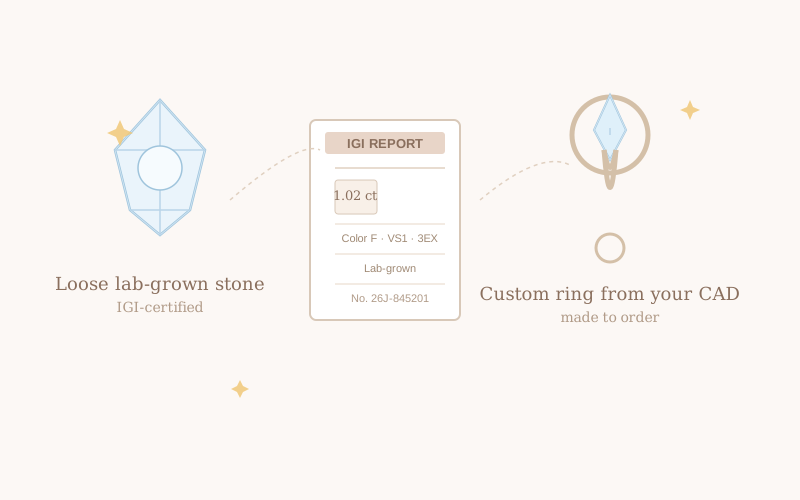
Ordering a custom lab-grown diamond from China is a very different process from buying at a local jeweler: you choose the stone, approve a computer model of the setting, wait for production, and the price is often a fraction of what a boutique quotes for the same stone. The trade-off is that you take on more of the verification yourself. This guide walks through the full process — choosing a vendor, reading a quote, checking an IGI certificate, deciding whether a group buy makes sense, and the mistakes buyers make most often.
The process has five stages: choose a vendor with a verifiable history, request an itemized quote with a specific certificate number, approve a CAD of your setting, pay in stages with buyer protection, and verify the finished piece against the certificate when it arrives. The two steps buyers most often skip are checking the certificate number on the lab's website and asking for a photo or video of the actual stone before shipment. Do those two things and most of the risk disappears.
1. Why buyers go to China for lab-grown diamonds
Lab-grown diamonds are chemically and structurally the same as mined diamonds — the gemological laboratories that grade them treat them as diamonds, and a diamond tester reads them as diamond. The difference is origin and price: a lab-grown stone can cost noticeably less than a mined stone with the same carat, color, clarity, and cut, and Chinese vendors sell both loose stones and finished custom rings at prices that local boutiques rarely match.
The second reason is customization. A Chinese vendor will make a ring to your exact specification — stone shape, setting style, metal, engraving — and send you a CAD drawing for approval before anything is cut. For buyers who want a specific design rather than a catalog piece, that is the real value. Communities like r/labdiamond and r/LabGroupSales document the experience in detail, which means you can read about a vendor's actual behavior before you ever contact them.
2. The five-stage process, stage by stage
Stage one: choose a vendor you can verify. The vendors buyers discuss most often in the lab-diamond communities — names that come up repeatedly on Reddit include Tianyu, Starsgem, and Provence, alongside smaller studios — have years of documented orders. Search the community for the vendor's name before you message them, read how past buyers describe the stones and the service, and be wary of vendors with no community footprint at all.
Stage two: request an itemized quote. A serious quote names the stone's carat, color, clarity, and cut, the certificate number (IGI or GIA), the setting design, the metal and weight, and the production timeline. Ask for the price in writing, broken out by stone and setting, and ask whether shipping and any payment fees are included. Vague quotes are the first red flag.
Stage three: approve the CAD. Before production, most vendors send a computer model of the setting from several angles, sometimes with a video. This is your last chance to change the design cheaply, so check proportions, stone position, band width, and any engraving text carefully. A buyer who approves a CAD without reading it has no one to blame for the result.
Stage four: pay in stages. The common pattern is a deposit to start production and the balance when the piece is ready to ship. Pay with a method that gives you recourse — cards and PayPal offer buyer protection, while wire transfers and crypto usually do not. If a vendor demands full payment by wire before showing you anything, treat that as a strong warning.
Stage five: verify on arrival. When the ring arrives, check the certificate number on the lab's website, confirm the laser inscription on the girdle matches the report, and compare the stone against the certificate's dimensions. If anything is off, contact the vendor immediately with photos and a copy of the certificate — reputable vendors resolve these cases, and documented history means you can also post in the community for help.
3. What an IGI certificate tells you — and how to check it
The two certificates you will see most often on Chinese lab-grown diamonds are IGI and GIA laboratory-grown reports. Both are independent laboratories, and both publish their report numbers online. Enter the number on the lab's website and you should see the exact stone described in the certificate: carat, color, clarity, cut, dimensions, and an origin line stating the stone is laboratory-grown.
Two details matter. First, the certificate describes a specific stone, so the number on the paper must match the number engraved on the diamond's girdle — a magnifying loupe or a phone camera with good zoom is enough to read it. Second, the certificate does not guarantee the finished ring; it only describes the loose stone. The setting, the metal, and the workmanship are the vendor's responsibility, which is why the CAD approval stage matters as much as the certificate.
4. Group buys: how they work and when they help
A group buy is a volume order organized through a community. One coordinator agrees a design and price with a vendor, members pay a deposit, and the vendor produces the same design for the whole group, usually at a better price than an individual order. r/LabGroupSales runs these regularly, and the posts include the price breakdown, the timeline, and later the finished rings, which makes the whole process unusually transparent.
Group buys help when you like the design and the vendor has a clean track record. They are not a way to skip verification: you are still buying from one vendor, so check the certificate, ask for photos of your stone, and keep the coordinator's posts as a record. For a first-time buyer, a group buy with an established vendor is often a lower-risk entry than a fully custom one-off, because the design has already been made and reviewed by others in the community.
5. Pitfalls to avoid
Vague pricing. A quote without a certificate number or an itemized breakdown is not a quote. Ask until you have a stone specification you can compare against other vendors.
Skipping the stone check. The most common regret is paying without seeing the actual stone. A photo or short video of your stone next to its certificate number, taken by the vendor, costs them nothing and gives you a record to compare against delivery.
Approving the CAD without reading it. The CAD is the contract for the finished ring. Check proportions, metal weight, and engraving before you approve — changes after production are expensive or impossible.
Hidden shipping and duty. Ask whether shipping is included, which carrier is used, and whether the vendor undervalues customs declarations (which some do, and which can cause problems at your border). Factor in import duties and taxes for your country before comparing the total cost to a local quote.
Paying by wire to an unverified vendor. No buyer protection means no recourse. If the vendor has no community history and insists on wire, walk away.
6. How BVDIY fits into this picture
BVDIY is a custom jewelry studio, not a loose-diamond marketplace, and we work the same way a careful vendor should: you choose your stone and setting, we show you the design before production, and the piece is made to your specification. If you want a lab-grown diamond ring without coordinating a vendor abroad yourself, you can design your lab-grown diamond ring at BVDIY and see the process on our own terms. If you prefer a bead-by-bead custom bracelet with the same made-to-order approach, the bracelet designer works the same way — your design, our production.
The general lesson applies everywhere, including with us: get it in writing, look at the actual product before you pay the balance, and keep the records. A custom piece is a collaboration, and the buyers who do best are the ones who stay involved at every stage.