
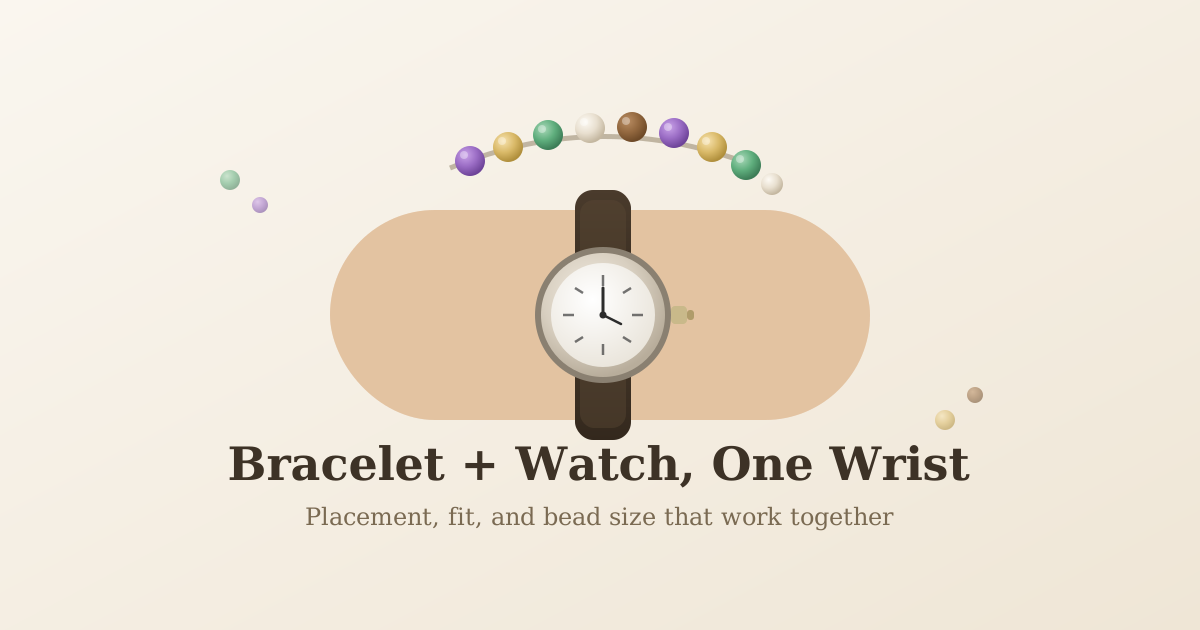
La pulsera de cuentas y el reloj son dos de las piezas que más se llevan en la muñeca, así que sorprende lo a menudo que la gente siente que tiene que elegir entre ellas. La buena noticia es que no hace falta. Con la posición adecuada, cuentas finas y un ajuste que deje algo de margen, ambos pueden compartir muñeca con comodidad, y en muñecas distintas forman una combinación fácil e intencionada. Esta guía explica dónde llevarlos, qué cuentas funcionan mejor junto a un reloj y cómo diseñar una pulsera que se lleve bien con el tuyo en lugar de chocar con él.
Lleva una pulsera fina de 6 mm en la misma muñeca que el reloj, por el lado de la caja más alejado de la mano, para que las cuentas descansen sobre el hueso de la muñeca y no toquen la corona. Haz que el ajuste sea algo más holgado de lo habitual, añade una cadena de extensión si puedes y evita que piedras duras presionen directamente la caja. Si tu reloj es voluminoso o prefieres una pulsera más llamativa de 8 o 10 mm, llévala en la otra muñeca: es la forma más sencilla de conseguir el look sin ningún roce. Todos los materiales que necesitas están en la biblioteca de cuentas, y el tamaño de 6 mm está disponible para cualquier diseño en el diseñador de pulseras.
1. ¿En la misma muñeca o en la otra?
La primera decisión es la más sencilla y depende sobre todo de tu reloj. Si llevas un reloj fino —un reloj de vestir, un automático pequeño, una esfera minimalista—, una pulsera de cuentas puede ir a su lado cómodamente en la misma muñeca. Si llevas algo voluminoso, como un reloj de buceo, un smartwatch o un cronógrafo, la pulsera estará mejor en la otra muñeca, donde puede tener todo el cuerpo que quieras sin competir por el espacio.
También hay que tener en cuenta el ritmo diario. La mayoría lleva el reloj en la muñeca no dominante, lo que deja libre la dominante, un lugar natural para varias pulseras que se mueven contigo. Si escribes o tecleas todo el día, una pulsera fina en la muñeca del reloj puede pasar totalmente desapercibida, pero una gruesa chocará una y otra vez con la mesa. Adapta el peso de la pulsera a la actividad de esa muñeca.
2. Dónde colocar la pulsera en la muñeca del reloj
Si los llevas juntos, la posición decide si resulta natural o incómodo. El lugar seguro es por encima del reloj, en el lado de la caja más cercano al codo. Así las cuentas descansan sobre el hueso de la muñeca, lejos de la corona, los pulsadores y el fondo de la caja. La pulsera no estorba al doblar la muñeca y las dos piezas quedan una junto a otra en lugar de una encima de otra.
Evita llevar la pulsera por debajo del reloj, entre la caja y la mano. Esa zona es territorio de la corona: la pulsera se deslizará hacia ella, se enganchará en el vástago y apretará cada vez que flexiones la muñeca. Si quieres una pulsera más cerca de la mano, llévala directamente en la otra muñeca.
3. Qué tamaño de cuenta y qué materiales funcionan junto a un reloj
Aquí el tamaño de la cuenta importa más que en casi cualquier otra situación, porque estás colocando dos objetos en un trozo de piel muy corto. Una pulsera de 6 mm es fina, ligera y lo bastante flexible para seguir la curva de la muñeca, así que casi desaparece junto al reloj. Una de 8 mm puede funcionar con un reloj fino, pero añade altura, hace que el reloj quede torcido y presiona el dorso de la mano al doblar la muñeca. Cuentas de 10 mm junto a un reloj son más escultura que joya, y rara vez aguantan cómodamente un día entero.
Los materiales también merecen atención. Las piedras y el cristal son duros —más que el vidrio y el metal pulido de la mayoría de los relojes—, así que las cuentas que rozan la caja pueden dejar finos arañazos con el tiempo. Si tu pulsera va en la muñeca del reloj, elige materiales suaves con el metal, como sándalo, ébano, concha o nácar, o añade algunos separadores metálicos para que las piedras más duras no toquen la caja. En la otra muñeca, cualquier material de la biblioteca de cuentas es seguro.
4. Ajuste: deja algo de margen a la pulsera
Una pulsera que queda perfecta en la muñeca desnuda puede resultar demasiado justa junto a un reloj, porque ambas piezas ocupan la misma piel y tiran una de otra al moverte. Si diseñas para la muñeca del reloj, busca un ajuste cómodo pero no ceñido: alrededor de medio centímetro de holgura, suficiente para que la pulsera se mueva un poco sin pasar por la mano.
Esta es una de las mejores razones para añadir una cadena de extensión a una pulsera personalizada. Te permite afinar el ajuste después de un día real de uso, cuando descubres exactamente dónde quiere quedarse la pulsera. Si es un regalo y la persona lleva reloj, la cadena de extensión marca la diferencia entre una pulsera que se lleva y una que solo se admira.
5. Dos looks fáciles de probar
En la misma muñeca. Una pulsera fina de 6 mm en un material que combine con la correa del reloj —madera en tono cuero con una correa marrón, cristal azul marino con un brazalete de acero—, llevada por encima del reloj. Se ve cuidada y en capas sin estorbar nunca. Es el look para la oficina, una cena o cualquier ocasión en la que quieras que se vean ambas piezas.
En muñecas distintas. El reloj queda solo en una muñeca y la otra lleva la pulsera o un pequeño conjunto. Aquí una pulsera de 8 mm luce de verdad, porque tiene una muñeca para ella sola y puede tener toda la textura que quieras —piedra volcánica, obsidiana, turquesa— sin agobiar a nada. También es la opción más cómoda para quien lleva un smartwatch o un reloj de buceo todo el día.
6. Pequeños hábitos que protegen ambas piezas
Elijas lo que elijas, un poco de atención mantiene ambas piezas en buen estado. Ponte la pulsera antes que el reloj y quítatela después, para que el cierre nunca golpee la esfera. Lleva las pulseras de piedra dura en la otra muñeca si tu reloj es especial para ti. Y si nadas o te duchas con el reloj, recuerda que la mayoría de las cuentas y cordones prefieren mantenerse secos; nuestra guía de cuidado de pulseras de cuentas (en inglés) explica qué evitar.
En resumen: cuentas finas, lejos de la corona, un poco de holgura, y ambas piezas se llevan bien. Diseña una pulsera de 6 mm para la muñeca del reloj o una más atrevida para la muñeca que es solo tuya.
Guías relacionadas: Cómo superponer pulseras de cuentas y Cómo combinar pulseras con tu ropa (en inglés).