
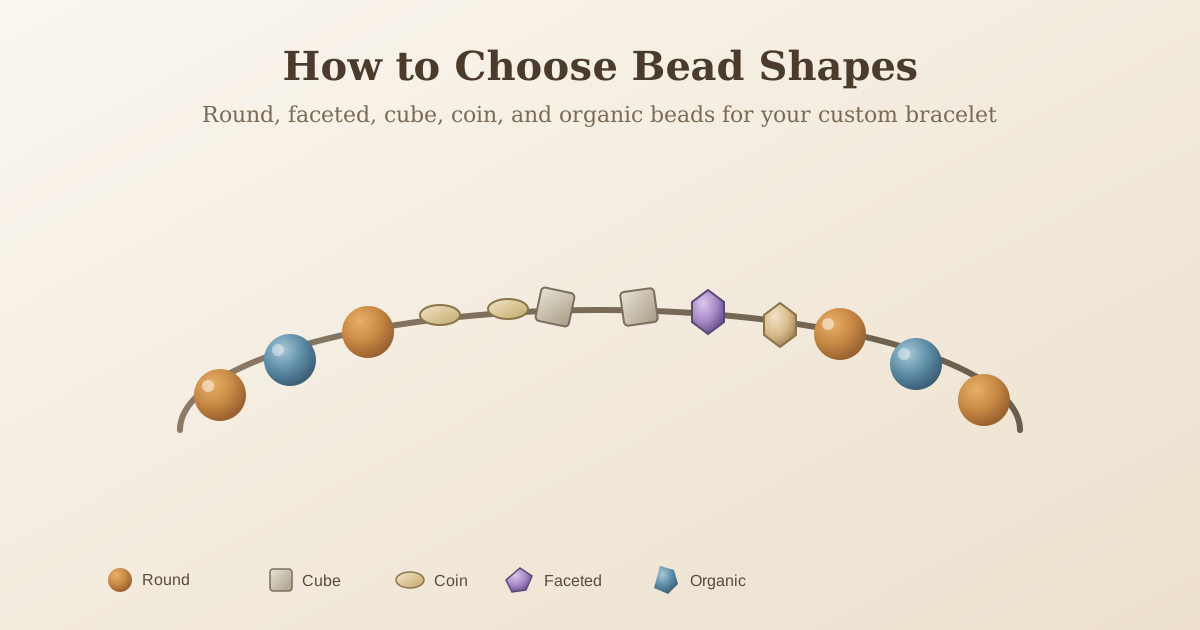
Bead size tells you how big a bracelet feels, and bead material tells you what it is made of — but bead shape is what gives a design its character. A round bead and a cube bead in the same color, the same size, make completely different bracelets: one soft and classic, the other sharp and modern. Shape also changes how a bracelet sits on the wrist, how it catches the light, and how it wears over time. This guide walks through the main bead shapes you will find in a bead library — round, faceted, cube, coin, and organic chips — and how to combine them so your custom design looks intentional rather than accidental.
Start with round beads as your base — they are comfortable, classic, and easy to wear every day. Add one accent shape for character: faceted beads for sparkle, cubes for a modern edge, coins for texture and layering, or organic chips for a natural, casual look. Keep accent shapes to about a third of the bracelet or less, and match the shape to the bead size so the design stays balanced. Every shape mentioned here is available in the bead library, and you can preview combinations in the bracelet designer.
1. Round beads: the classic that never goes wrong
Round beads are the default for a reason. They roll smoothly against the skin, sit evenly on the cord, and look good in every material — glass, gemstone, wood, shell, or ceramic. A bracelet made entirely of round beads is timeless: it goes with a t-shirt or a blazer, and it does not compete with the rest of your jewelry. If you are designing a bracelet for someone else and are not sure of their taste, round beads are the safest bet you can make.
Round beads also make sizing more forgiving. Because they stack evenly, a round-bead bracelet drapes predictably around the wrist, and small size differences barely show. That is one reason most first custom bracelets are built on rounds — and why they stay favorites for years.
2. Faceted beads: light, sparkle, and a dressier feel
Faceted beads are cut with flat planes that catch and reflect light, the way a gemstone does. Take the exact same color of glass and cut it with facets, and suddenly the bracelet has movement — it glints when the wrist turns, which makes the piece feel livelier and a little more special. Faceted beads are the easiest way to add polish to a design without changing the color palette or the size.
Two things are worth knowing about facets. First, they read as dressier, so a fully faceted bracelet tends to feel like evening jewelry rather than everyday wear. Second, the edges are slightly sharper, so very soft stones with facets can chip if knocked hard. Glass and crystal faceted beads are hard and hold their edges well; if you want sparkle without the worry, use a few faceted beads as accents among smooth rounds.
3. Cube and geometric beads: a modern, structured look
Cube beads are exactly what they sound like — small squares with flat faces and crisp edges. Where round beads feel soft, cubes feel architectural. A bracelet of cube beads reads as modern and minimal, especially in matte materials or in a single color. Cubes also sit differently on the wrist: they tend to stay in place rather than rolling, which gives the bracelet a tidy, deliberate line.
Geometric beads work best when the rest of the design stays simple. A few cubes alternating with rounds adds texture and structure; a bracelet made entirely of large cubes can feel stiff and less comfortable, since the edges press against the skin. Keep cubes to a size that still drapes, and pair them with rounds to keep the wrist comfortable.
4. Coin and flat beads: texture and layering
Coin beads are thin and flat, like tiny discs, and they do something no other shape does: they stack. Where a round bead shows itself from every angle, a coin bead lies against the wrist and shows its face — which makes it perfect for stamped letters, engraved patterns, or beads with a two-tone finish. A bracelet with coin beads has a layered, tactile quality that feels different to wear and to touch.
Coins are also the friendliest shape for stacking bracelets. Flat beads sit low against the wrist, so several stacked bracelets do not bunch up the way chunky rounds can. If you are designing a bracelet to be worn with other pieces, or a name bead bracelet where the letter beads need to face outward, coin and flat shapes are your best starting point.
5. Organic shapes: chips, nuggets, and natural stones
Not every bead is a perfect geometric shape. Chip beads are small, irregular pieces of stone, and nuggets are larger, rounded-but-uneven shapes. Both keep the natural character of the material — every chip is slightly different, which is exactly the appeal. An organic-shape bracelet feels earthy, casual, and one-of-a-kind in a way that machine-perfect beads never can.
Organic beads pair beautifully with simple materials: chips with wooden beads, nuggets with leather cord, raw stones with a single metal spacer. The trade-off is that irregular beads sit less predictably on the cord, so sizing is a little less precise, and the look is firmly casual rather than dressy. Choose organic shapes when the feeling matters more than the precision.
6. How to mix shapes without making a mess
Mixing shapes is where custom design gets fun, and it follows one simple rule: one base, one accent. Let round beads carry most of the bracelet, then introduce a single accent shape with a clear pattern — three cubes between every five rounds, one faceted bead at the center, a coin bead on each side of the clasp. The pattern gives the eye something to follow, and the bracelet reads as designed rather than thrown together.
Two practical checks before you commit. First, proportion: a 4mm cube next to an 8mm round will look like an accident, so keep accent shapes close to the base size. Second, color: shapes with the same color palette unify a mixed design, while mixing shapes and colors at the same time is how bracelets start to look chaotic. Pick one variable to vary at a time.
7. Shape, comfort, and durability: what to check
Before you finalize a design, think about who will wear it and how. Rounds and smooth ovals are the most comfortable for all-day wear and the best choice for sensitive wrists. Cubes and other angular shapes add structure but press more against the skin, especially in larger sizes. Faceted beads sparkle but have edges that need reasonably hard material. Organic chips are charming but the least precise in fit.
Durability follows material more than shape: glass and crystal hold their edges; softer gemstones and some ceramics chip more readily when cut with sharp facets or thin edges. If the bracelet is for daily wear, a round or gently shaped design in a durable material will look good for years with minimal care. If it is for a special occasion, feel free to choose the shape that makes the strongest impression.
Ready to experiment with shapes? Open the bracelet designer, browse round, faceted, cube, coin, and organic beads in the bead library, and build a design that is yours bead by bead.
Related guides: How to Choose Bead Size for a Custom Bracelet and Pearl vs Crystal Beads.